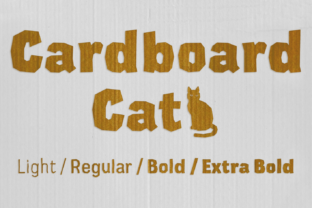
Cardboard: The Edgy and Fun Display Font That Adds a Sweet Touch to Your Designs
In the world of design, typography plays a crucial role in conveying a message, setting a tone, and capturing attention. One font that stands out for its unique blend of edginess and charm is Cardboard. This display font is more than just a visual element—it's a creative tool that can transform any idea into an eye-catching masterpiece. Whether you're working on a branding project, a marketing campaign, or a personal creative endeavor, Cardboard offers a fresh and dynamic approach to typography.
What Is Cardboard?
Cardboard is a display font designed to add a playful yet bold presence to your designs. Its name reflects its character—edgy, fun, and full of personality. Unlike traditional serif or sans-serif fonts, Cardboard has a handcrafted feel that mimics the texture of real cardboard. This gives it a tactile quality that can evoke a sense of nostalgia, creativity, and innovation all at once.
The font’s design features irregular edges, slight imperfections, and a slightly uneven baseline, which contribute to its distinctive look. These elements make Cardboard ideal for projects that require a bit of whimsy or a modern twist on vintage aesthetics. It’s not just a font; it's a style statement that can elevate your work from ordinary to extraordinary.
Challenges and Opportunities in Typography
Many designers face the challenge of finding a font that balances uniqueness with readability. While some fonts are too flashy or hard to read, others lack the visual impact needed to stand out. This is where Cardboard shines. It offers a perfect middle ground—eye-catching without being overwhelming, and expressive without sacrificing clarity.
For professionals in fields like graphic design, advertising, or digital marketing, the right font can make a significant difference in how a message is received. Cardboard provides a solution for those looking to break away from the monotony of standard typefaces while maintaining a professional appearance. It’s especially useful when the goal is to create a memorable brand identity or to convey a specific mood or theme.
How Cardboard Can Help You Achieve Your Goals
Whether you're designing a logo, creating social media content, or developing a website, Cardboard can be a valuable asset. Its versatility allows it to work well in both digital and print formats, making it suitable for a wide range of applications. For instance, if you're launching a new product line with a quirky or eco-friendly theme, Cardboard can help reinforce that message through its visual style.
Another benefit of Cardboard is its ability to add a touch of authenticity to your work. In an era where digital design often feels impersonal, using a font with a handmade aesthetic can make your project feel more genuine and relatable. This is particularly useful for small businesses, artists, or creators who want to connect with their audience on a deeper level.
Practical Applications of Cardboard
Cardboard is most commonly used in design projects that require a strong visual identity. Here are a few practical examples:
- Branding: Use Cardboard for logos, business cards, or packaging to create a unique and memorable brand image.
- Marketing Materials: Incorporate Cardboard into posters, banners, or advertisements to grab attention and stand out from competitors.
- Web Design: Apply Cardboard to headings or call-to-action buttons to add visual interest and reinforce your brand’s personality.
- Print Media: Use Cardboard in brochures, flyers, or magazine layouts to create a visually engaging experience.
By integrating Cardboard into these areas, you can create a cohesive and impactful design that resonates with your target audience.
Considerations When Using Cardboard
While Cardboard is a powerful tool, it’s important to use it strategically. Overuse can lead to a cluttered or unprofessional look, so it’s best to reserve Cardboard for key elements such as headlines, titles, or focal points. Pairing it with a simpler, more readable font for body text can help maintain balance and ensure that your message remains clear.
Additionally, consider the context in which Cardboard will be used. For example, while it may work well for a creative agency or a lifestyle brand, it might not be the best choice for a financial institution or a legal firm that requires a more formal appearance. Understanding your audience and the message you want to convey will help you determine the best way to use Cardboard.
How Different Users Approach Cardboard
Designers, marketers, and creatives may have different approaches to using Cardboard, depending on their goals and preferences. Some may use it as a signature font to give their work a distinctive flair, while others may incorporate it sparingly to add a subtle touch of personality. For instance, a freelance designer might use Cardboard to showcase their creativity in a portfolio, whereas a marketing team might use it in a campaign to emphasize a playful or innovative brand image.
Ultimately, the effectiveness of Cardboard depends on how well it aligns with the overall design strategy. Experimentation and testing are key to finding the right balance between style and functionality.
Conclusion
Cardboard is more than just a font—it’s a creative expression that brings energy, personality, and a unique visual identity to your work. Whether you're looking to make a bold statement, add a touch of fun, or create something truly memorable, Cardboard offers a versatile and effective solution. By understanding its strengths and limitations, you can harness its potential to enhance your designs and achieve your creative goals.